Skip to content
Esprit Vieux Bois
Oak bedroom wardrobe
Interior doors

Made-to-measure reclaimed wood cupboard doors

Moulded panels, louvres, old oak boards: a cupboard door made for your opening, with one or two leaves.

Cupboard door

A door for every cupboard.

A made-to-measure cupboard door is made for a precise opening: height, width, one or two leaves, opening direction. In our workshop in Eygalières we make cupboard doors in reclaimed wood, panelled, louvred or in old oak boards, to dress a cupboard, a wardrobe or a dressing room.

The wood and the tint are chosen for the room: raw old oak, light oak, the grey of moulded panels. The finish is decided with you, varnished or painted as you prefer, and the ironwork (handles, knobs, fittings) matches the wood.

In a bedroom, a cupboard door dresses a whole wall; in an entrance or a corridor, it hides storage without breaking the line of the interior doors. It can match your interior doors, your furniture and your reclaimed wood bookcases.

All our interior doorsOur made-to-measure bookcasesSee our interior doors in photos

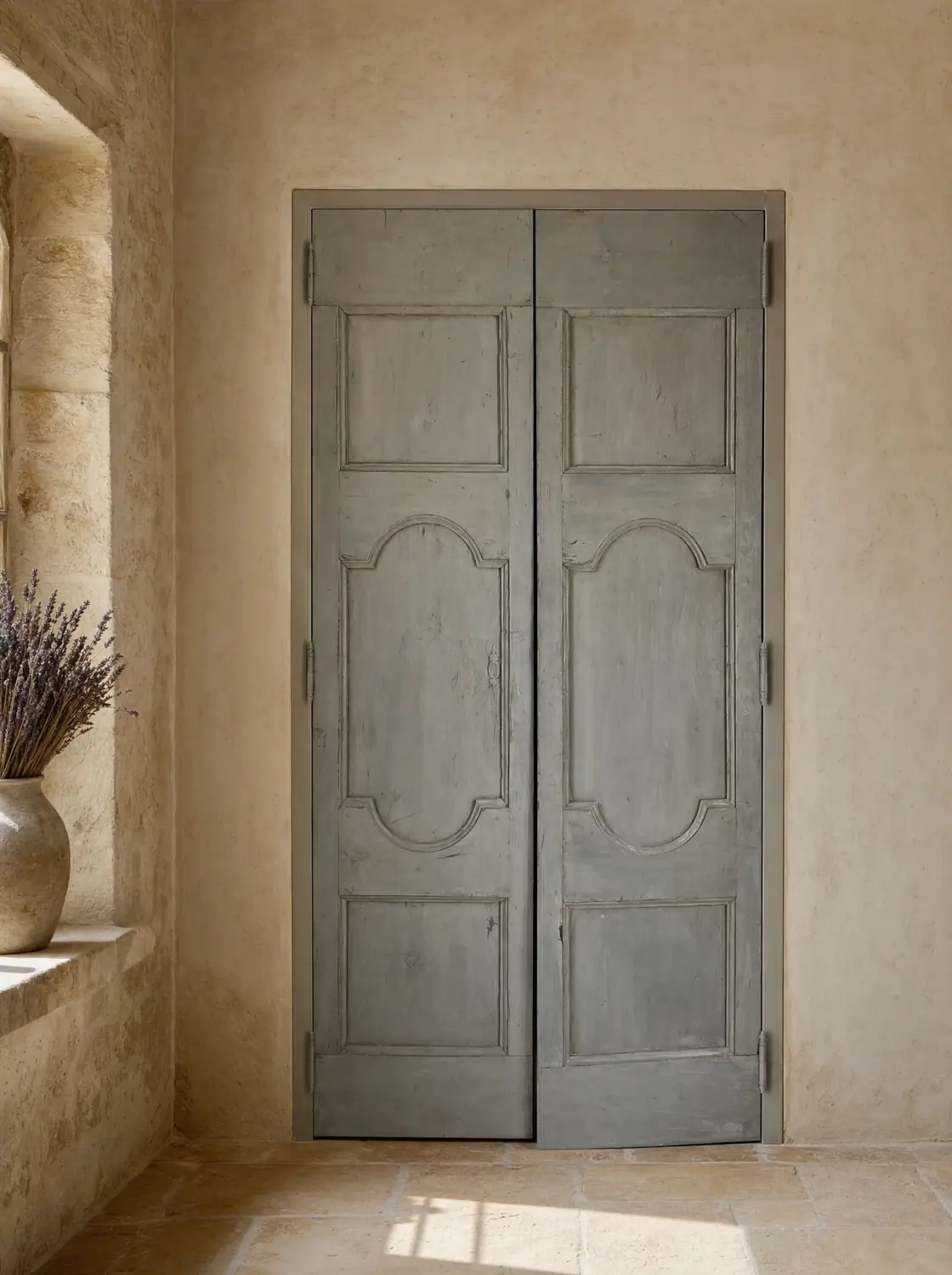
Grey panelled double door

Panelled door

Two moulded leaves, grey tint
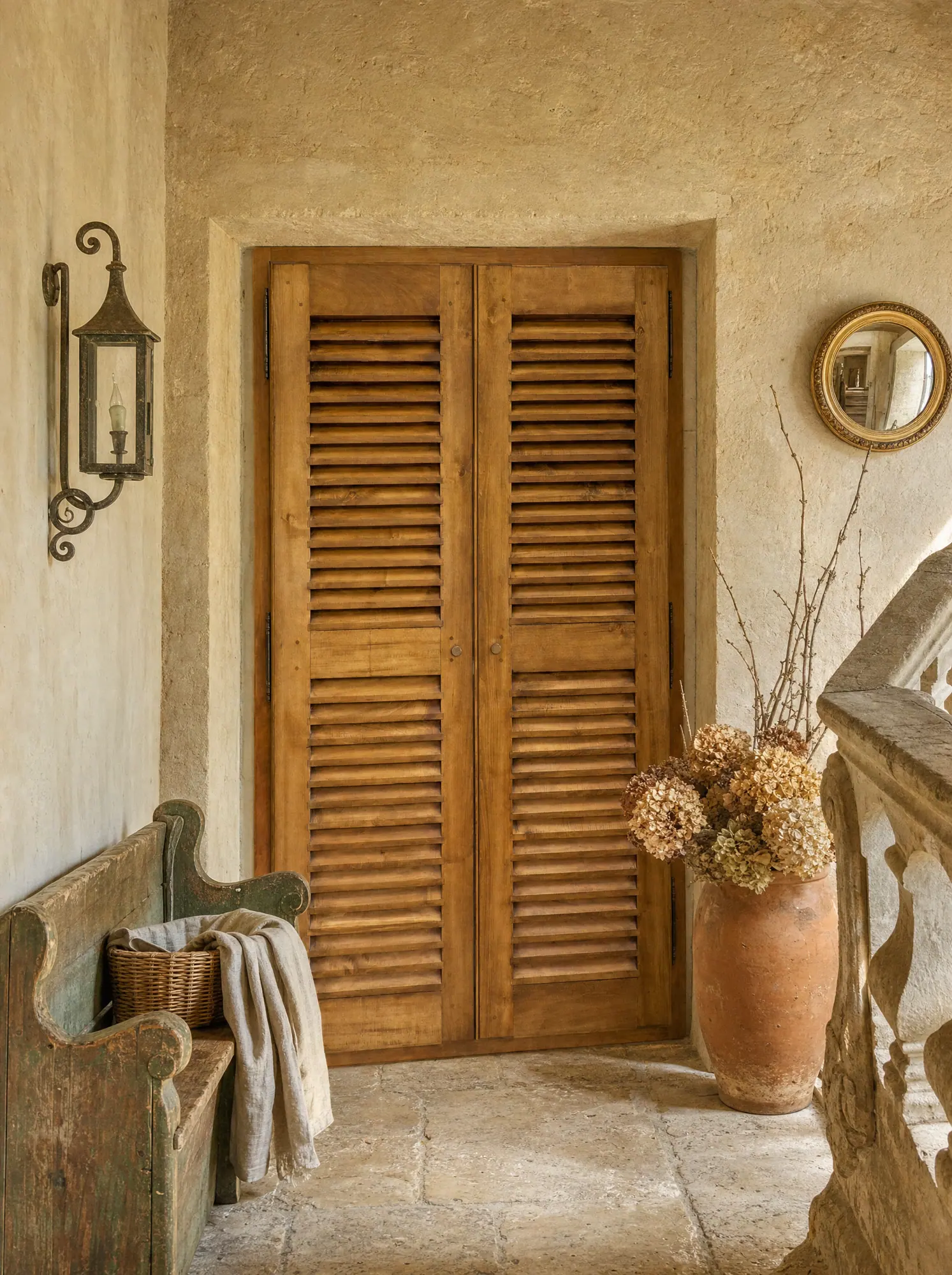
Reclaimed wood louvred cupboard doors, two leaves, in a stone niche on a bastide landing

Louvred door

Two leaves with angled slats

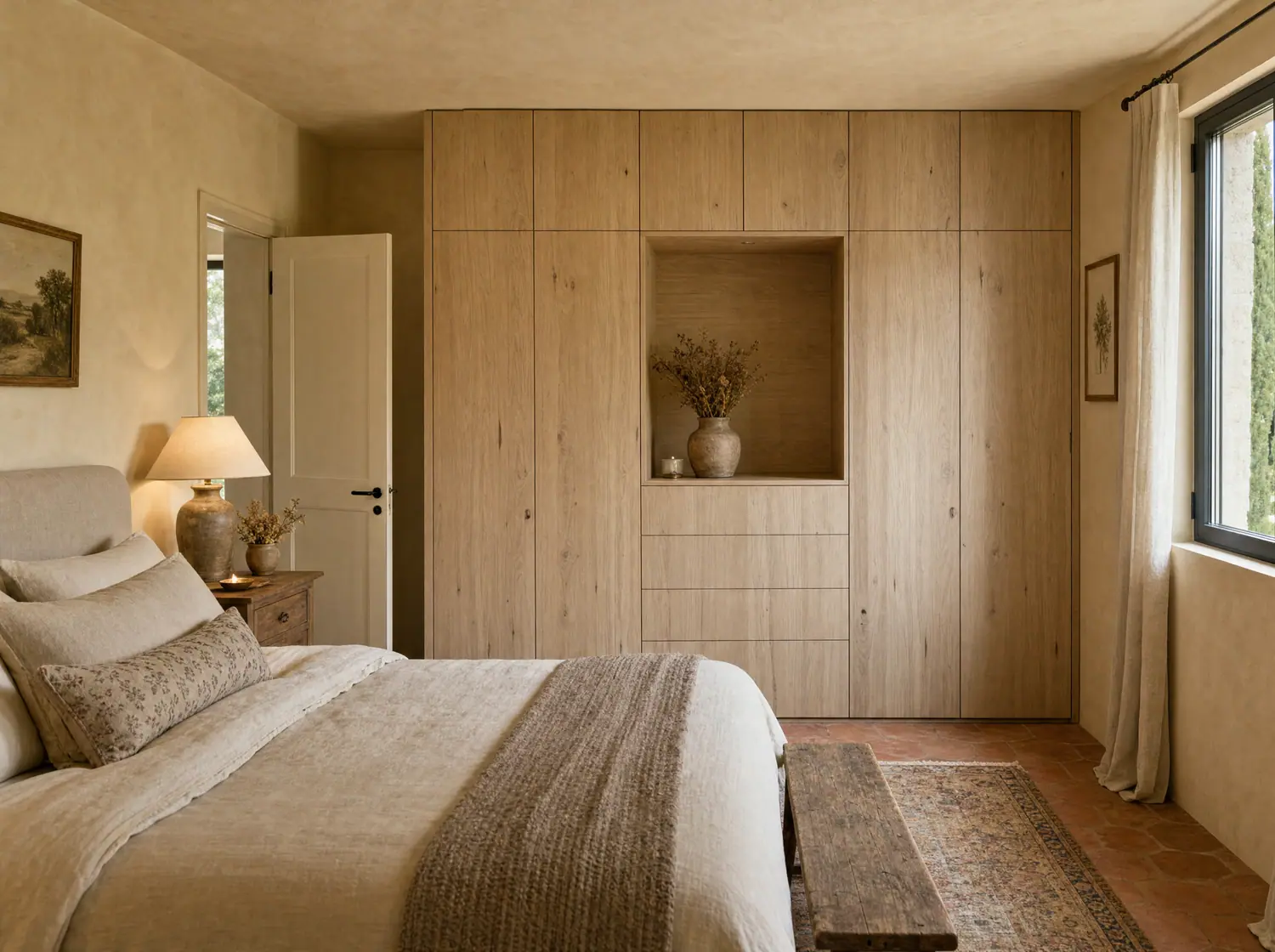
Oak bedroom wardrobe

Bedroom cupboard

Oak, a wall of cupboards

The families

Four cupboard doors.

  • The panelled door

    Two leaves with moulded panels, in a grey tint or in natural wood: the cupboard door that extends the interior doors of a house with character.

  • The louvred door

    Wooden louvres on two leaves, letting air and light through: a Provençal-style cupboard door, for a bedroom or a corridor.

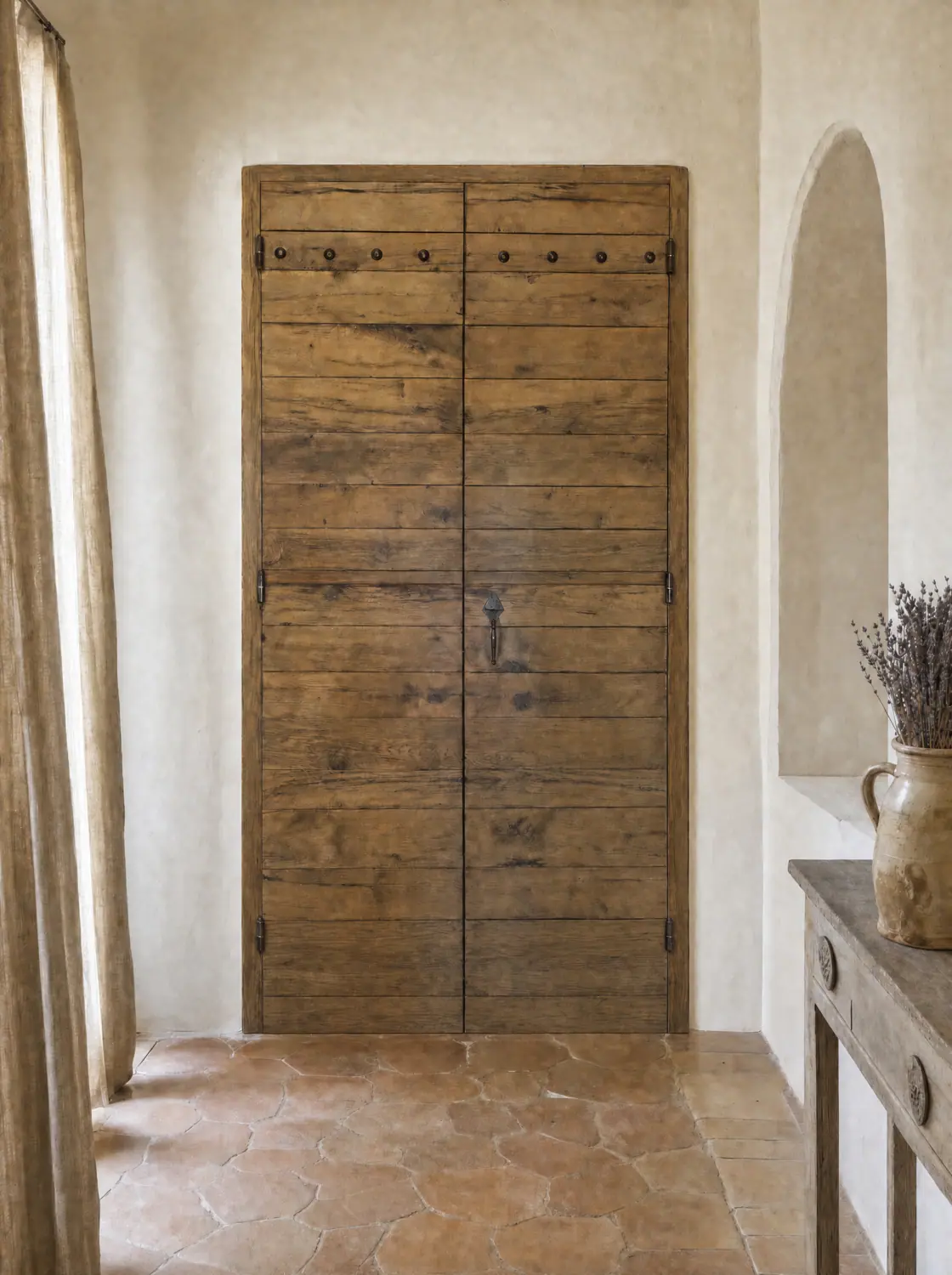
  • The old oak plank door

    One or two leaves in assembled old oak boards, with forged nails: a rustic cupboard door with a raw material.

  • The bedroom cupboard

    A wall of oak cupboards that dresses a whole bedroom wall, with its central niche: the doors blend into the wall.

Exploded sketch

Panelled door

The full joinery glossary
12345678910
  1. 1StileA vertical member of a frame. The hanging stile carries the pintles or hinges; the lock stile, on the other side, takes the lock and the handle.
  2. 2RailA horizontal member joined between two stiles: top rail, middle rail (or lock rail) and bottom rail, usually the widest to withstand knocks and damp from the floor.
  3. 3TenonThe thinned end of a piece of wood, cut to fit exactly into a mortise. It is how rails are joined into stiles.
  4. 4MortiseA rectangular cavity cut into a piece to receive a tenon. Mortise and tenon is the most common joint in traditional joinery.
  5. 5Tongue and grooveThe groove is a long, narrow slot cut into the edge of a piece; the tongue is the projecting part of the next piece that fits into it. The boards of a door or a floor are joined this way.
  6. 6PanelThe infill of a framed door, set in the grooves of the stiles and rails without glue, so that the wood can move with the seasons without splitting.
  7. 7Raised panel (bevel)The bevelled, thinned edge of a panel, which lets it fit into the groove of the frame and gives the door its relief. This is called a raised panel.
  8. 8PegA small hardwood peg driven through a tenon and its mortise. It locks the joint without glue; its head remains visible on the face.
  9. 9Mortise lockA lock set into the thickness of the lock stile: only the faceplate, the handle and the keyhole remain visible.
  10. 10Lift-off hingeA hinge in two parts, one on the frame and one on the leaf, joined by a pin. More discreet than a strap hinge, it is mostly used on interior doors.

Panelled door

A framed interior door: the stiles are pulled apart to show the tenons, the mortises and the groove that holds the panels.

Tap or hover over a part of the drawing: its definition appears here.

The trade's vocabulary

The vocabulary of a cupboard door.

The full glossary and door diagrams
Leaf (opening part)
The moving part of the door, which swings or slides. A double door opens in two parts; one is often held shut by bolts and only opened to bring in furniture.
Louvres
Angled slats fixed between the stiles, which let air through without letting you see through. They are used for shutters and cupboard doors.
Panel
The infill of a framed door, set in the grooves of the stiles and rails without glue, so that the wood can move with the seasons without splitting.
Lift-off hinge
A hinge in two parts, one on the frame and one on the leaf, joined by a pin. More discreet than a strap hinge, it is mostly used on interior doors.
Frequently asked questions

What people ask us most often.

Do you make made-to-measure cupboard doors?

Yes. Every cupboard door is made to the exact dimensions of your opening in our workshop in Eygalières: height, width, one or two leaves, species, tint and ironwork are chosen with you.

What is the difference between a panelled and a louvred cupboard door?

The panelled door is solid: its moulded panels completely hide the storage. The louvred door is open: its angled slats let air and light through. The choice depends on the room and on what the cupboard holds.

Can a cupboard door be adapted to an existing opening?

Yes, that is the principle of made-to-measure: we start from the height and width of your opening, and we adapt the door, its leaves and its ironwork.

Which wood should I choose for a cupboard door?

Raw old oak for a rustic door, light oak for a bright room, or a painted finish to match the walls. The wood is chosen with the room, the light and the neighbouring interior doors.

Do you make sliding cupboard doors?

For a sliding door, we make sliding barn doors in old pine or raw old oak, on a black rail. Tell us about your opening: we study the solution with you.

Can a cupboard door seen on this page be reproduced?

Yes, all our pieces can be reproduced and adapted to your opening: dimensions, number of leaves, species, tint and ironwork.

A cupboard door for your project?

Dimensions of the opening, number of leaves, species, tint: we design the door with you.

Request my cupboard door