Skip to content
Esprit Vieux Bois
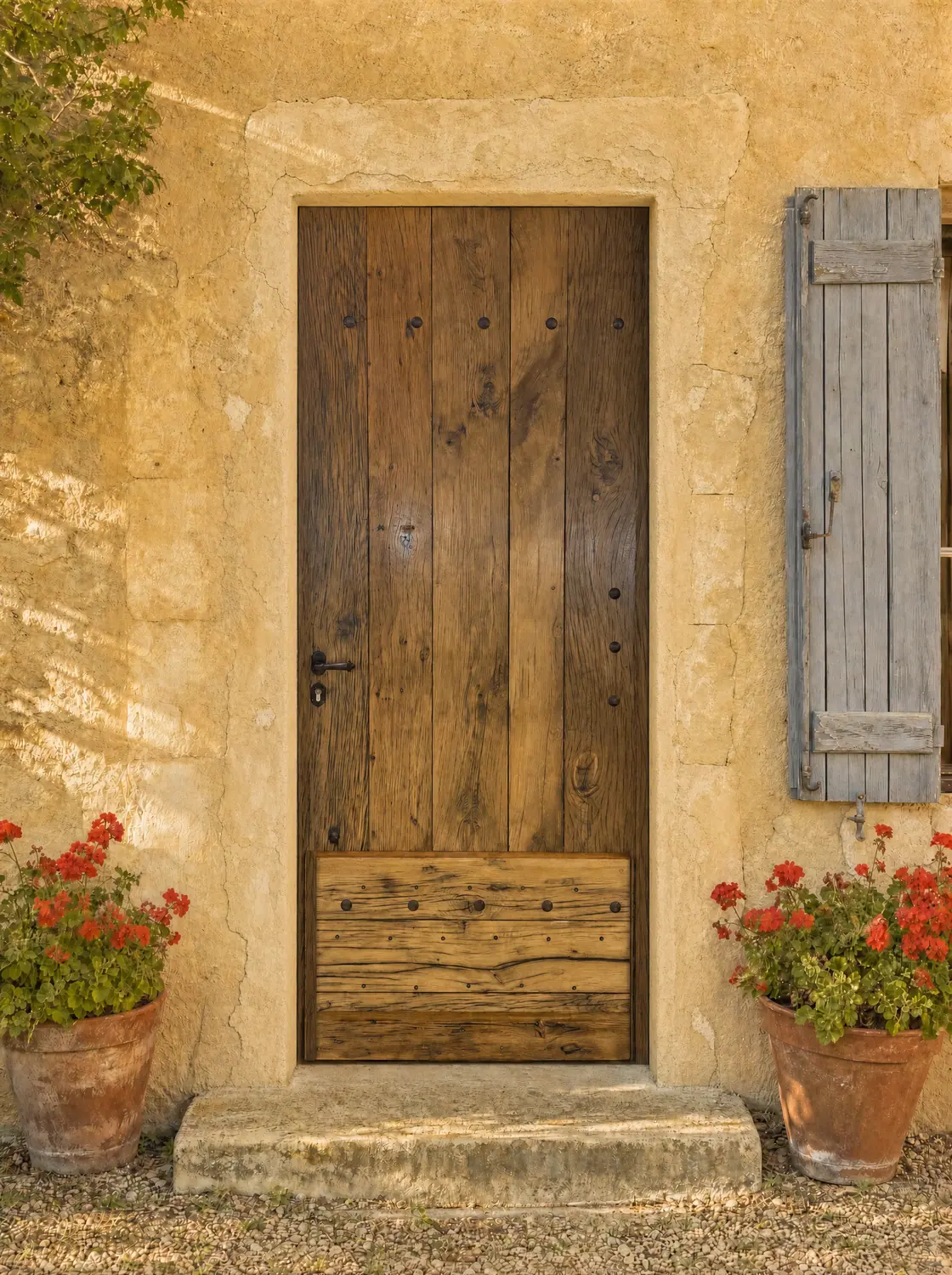
Old oak entrance door set in an ochre plastered wall, with geraniums and a grey-blue shutter
Collections

Made-to-measure solid oak and reclaimed wood entrance doors

Century-old oak boards, walnut, forged ironwork: every entrance door is assembled by hand and adapted to its opening.

Solid oak entrance door

Character before it is even opened.

A solid reclaimed oak entrance door has presence: patinated boards, forged nails, black ironwork, a grain marked by time. Many are cut from old wagon-floor oak, reclaimed boards that keep the traces of their first life. In our workshop in Eygalières we make entrance doors to measure in solid oak, reclaimed pine and walnut, solid, arched, glazed or double-leaf.

Every door is assembled by hand and adapted to its opening: dimensions, opening direction, boards or panels, ironwork.

A door can also have two faces built differently: boards on the outside and, on the inside, a lining of horizontal or vertical boards, for example in old pine, fixed with forged nails. Each face keeps its own look, suited to the facade and to the room.

The workshop also offers restored antique doors, from the 16th to the 20th century, in walnut or oak, which keep their patina and their antique ironwork. An old wooden door can also be reproduced identically, to your dimensions.

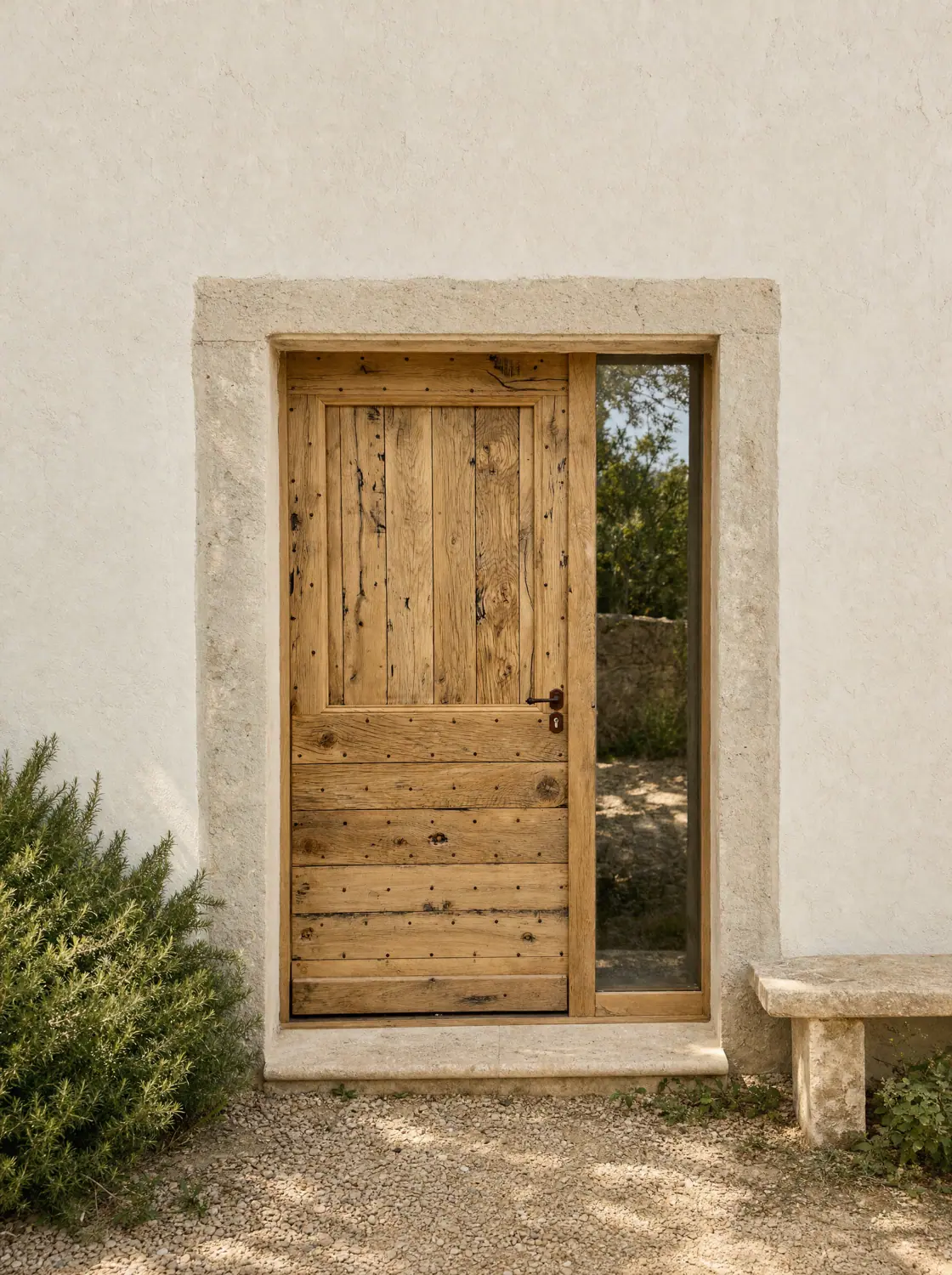
Glazed doors, such as our Mas and Bergerie models in reclaimed oak, are made with a metal frame, for example with 4 panes, and burglar-resistant glass.

See our entrance doors in photosOur interior doorsOur reclaimed wood gates

Entrance doors

Character and authenticity.

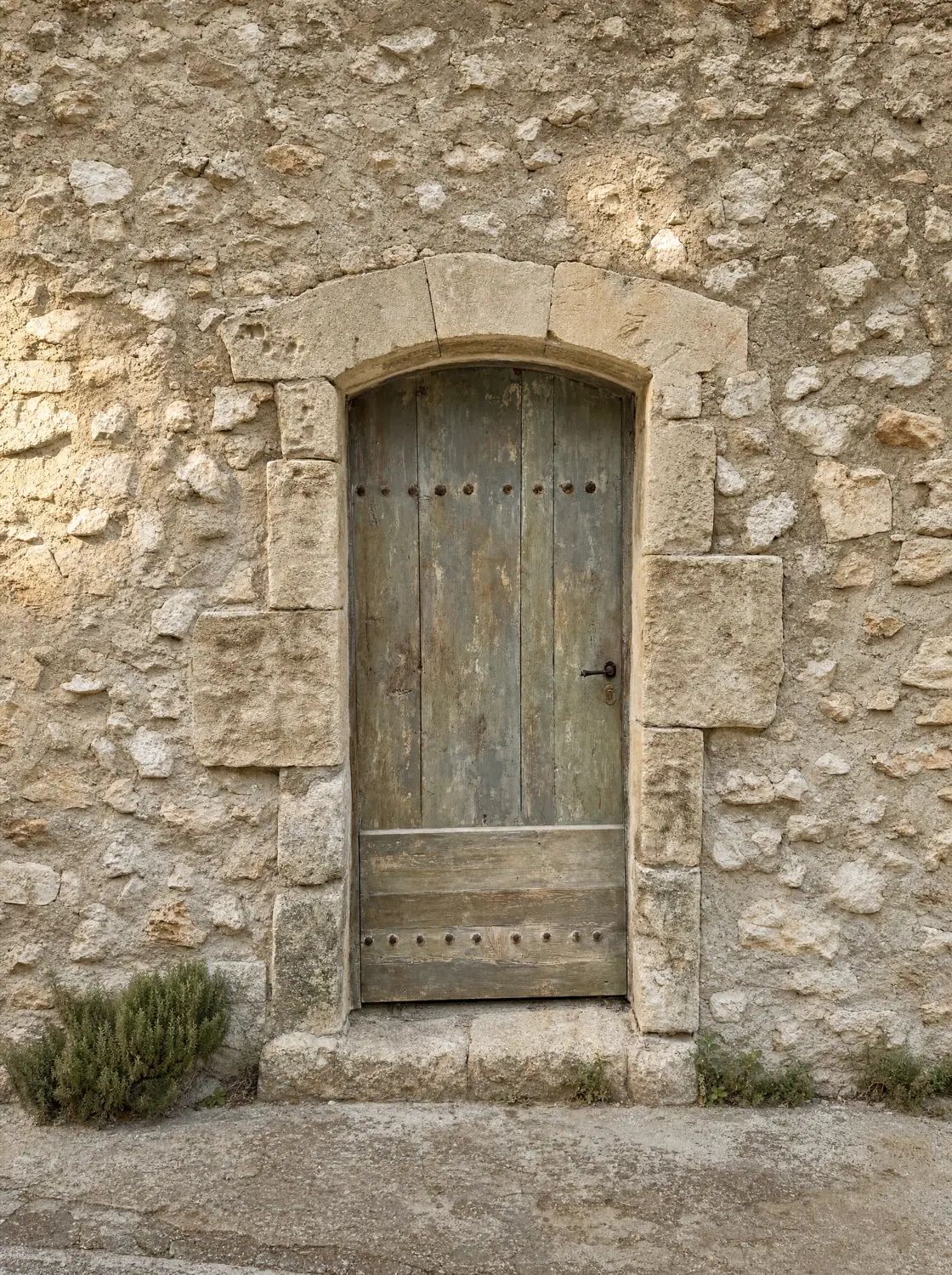
Old oak door

Old oak door

Vertical boards
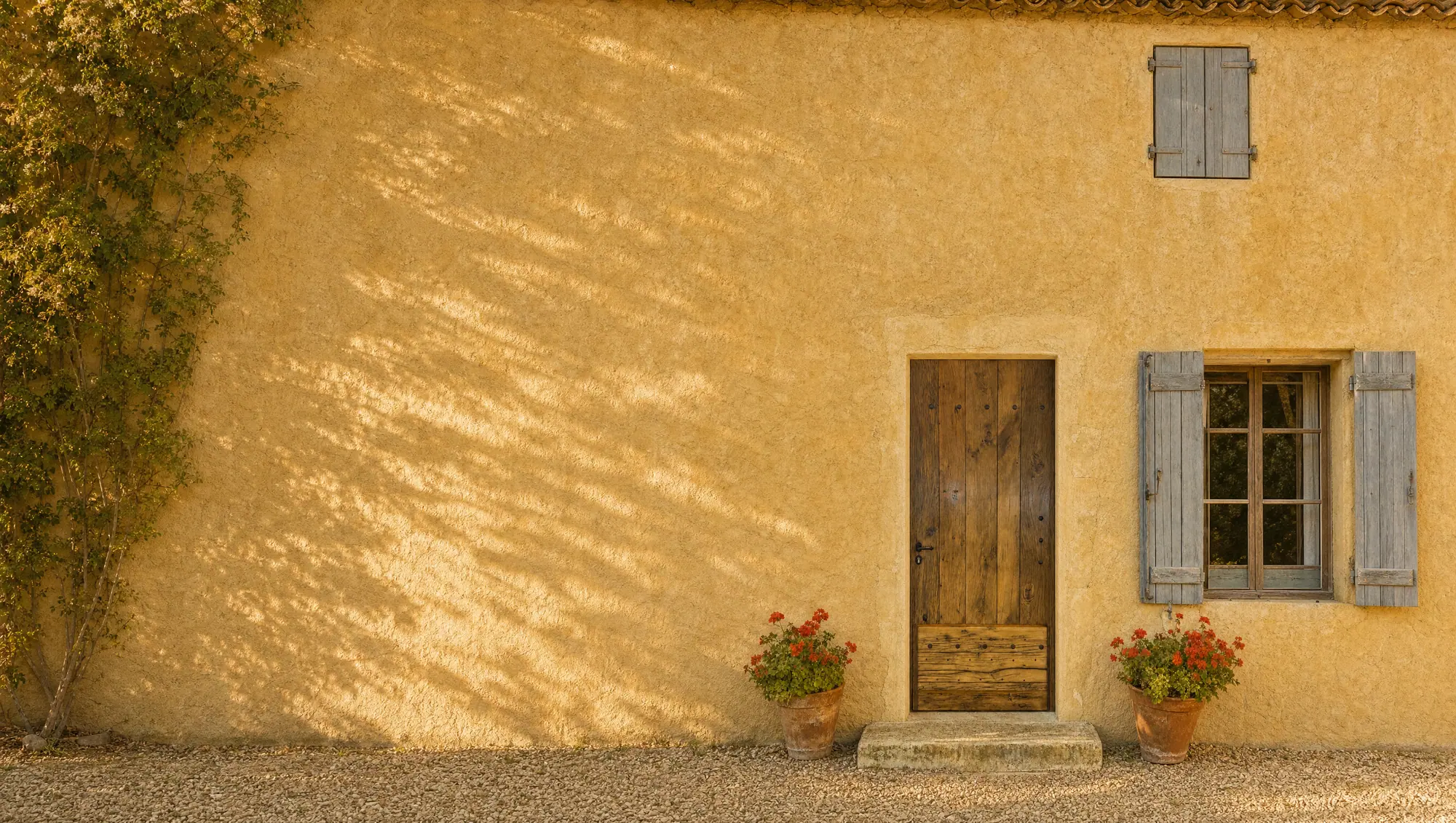
Arched door with nails in patinated old pine

Patinated old pine arched door

Patinated planks, forged nails

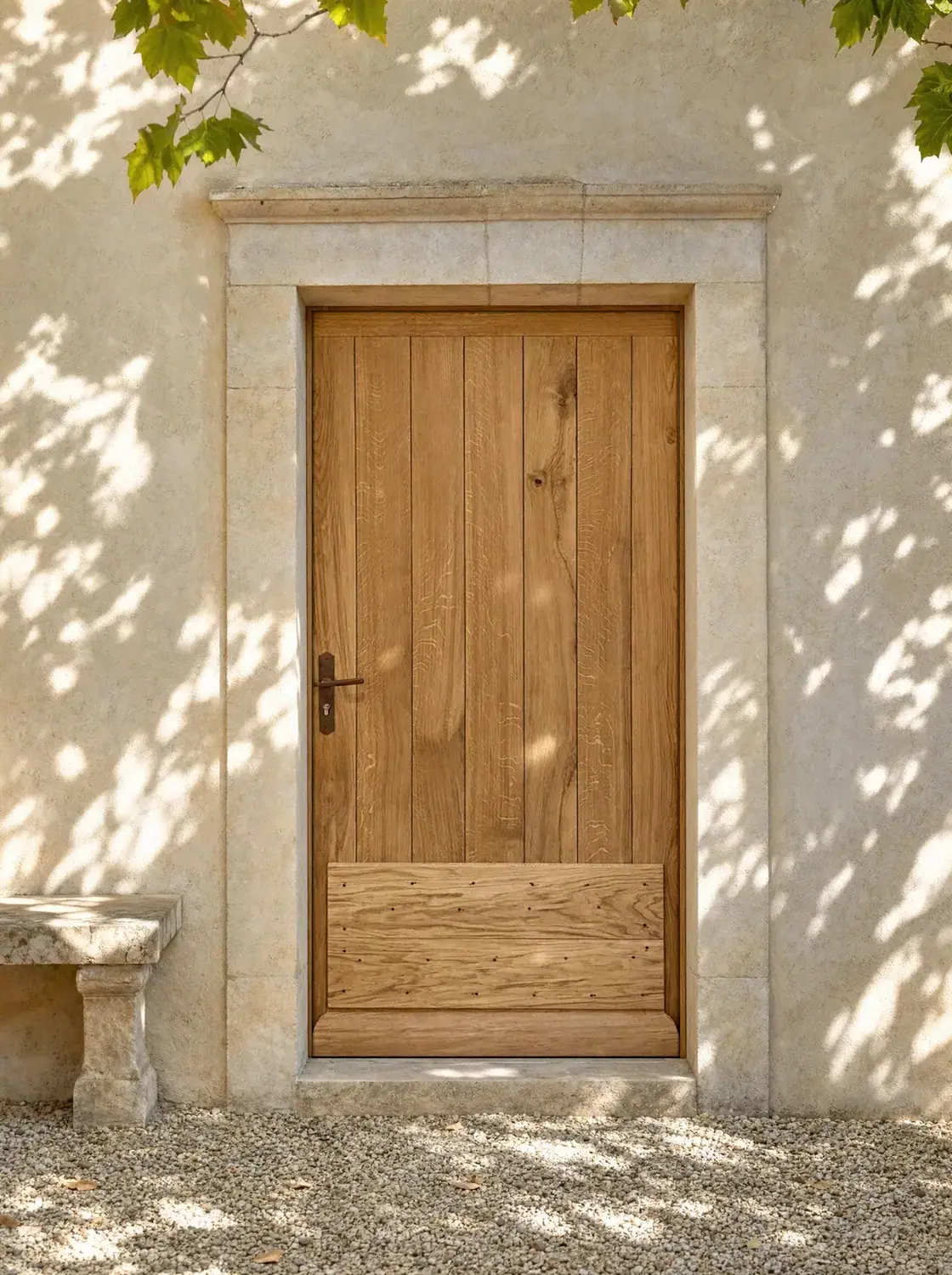
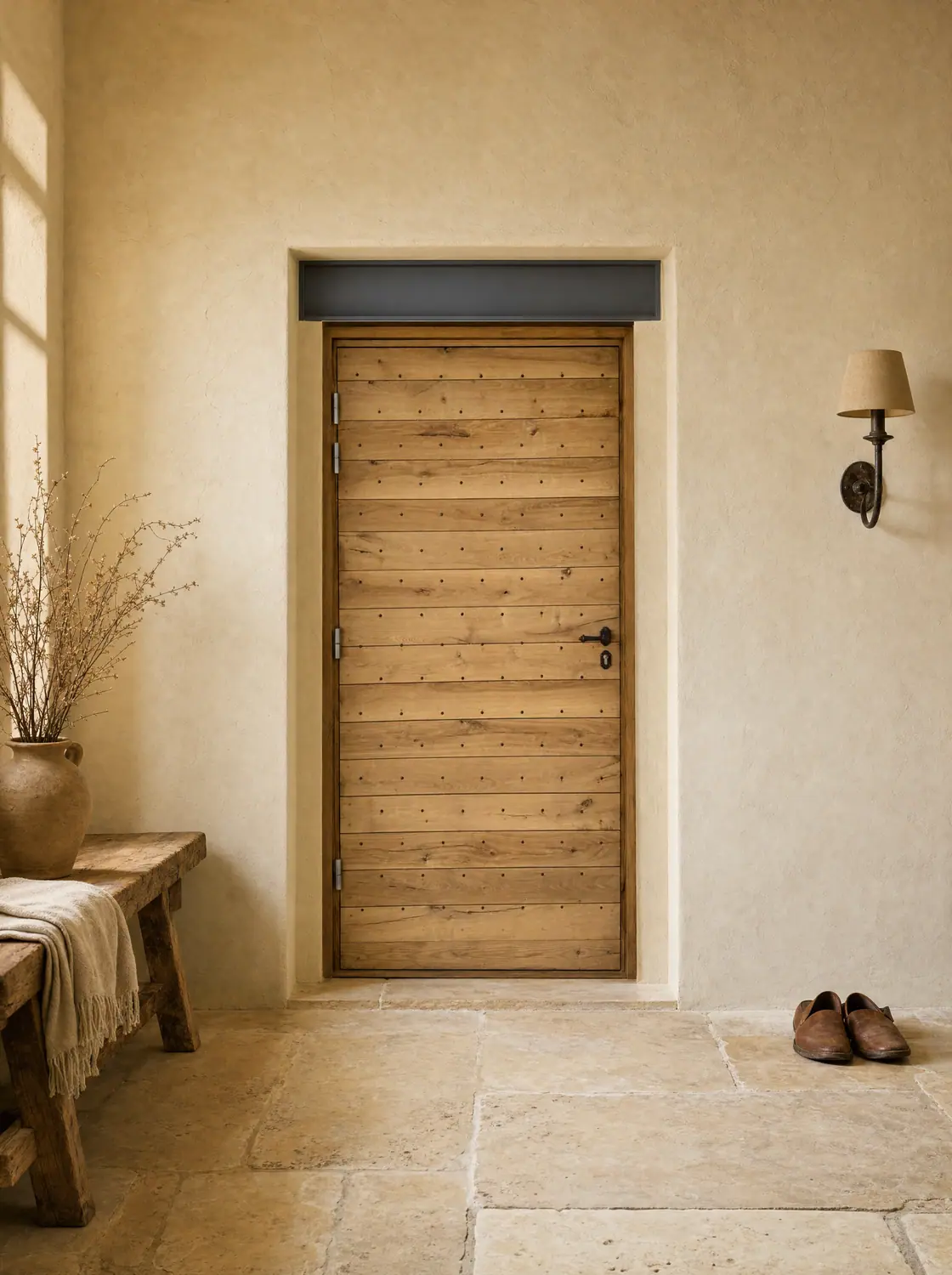
Light oak door

Oak door

Oak planks and lower panel

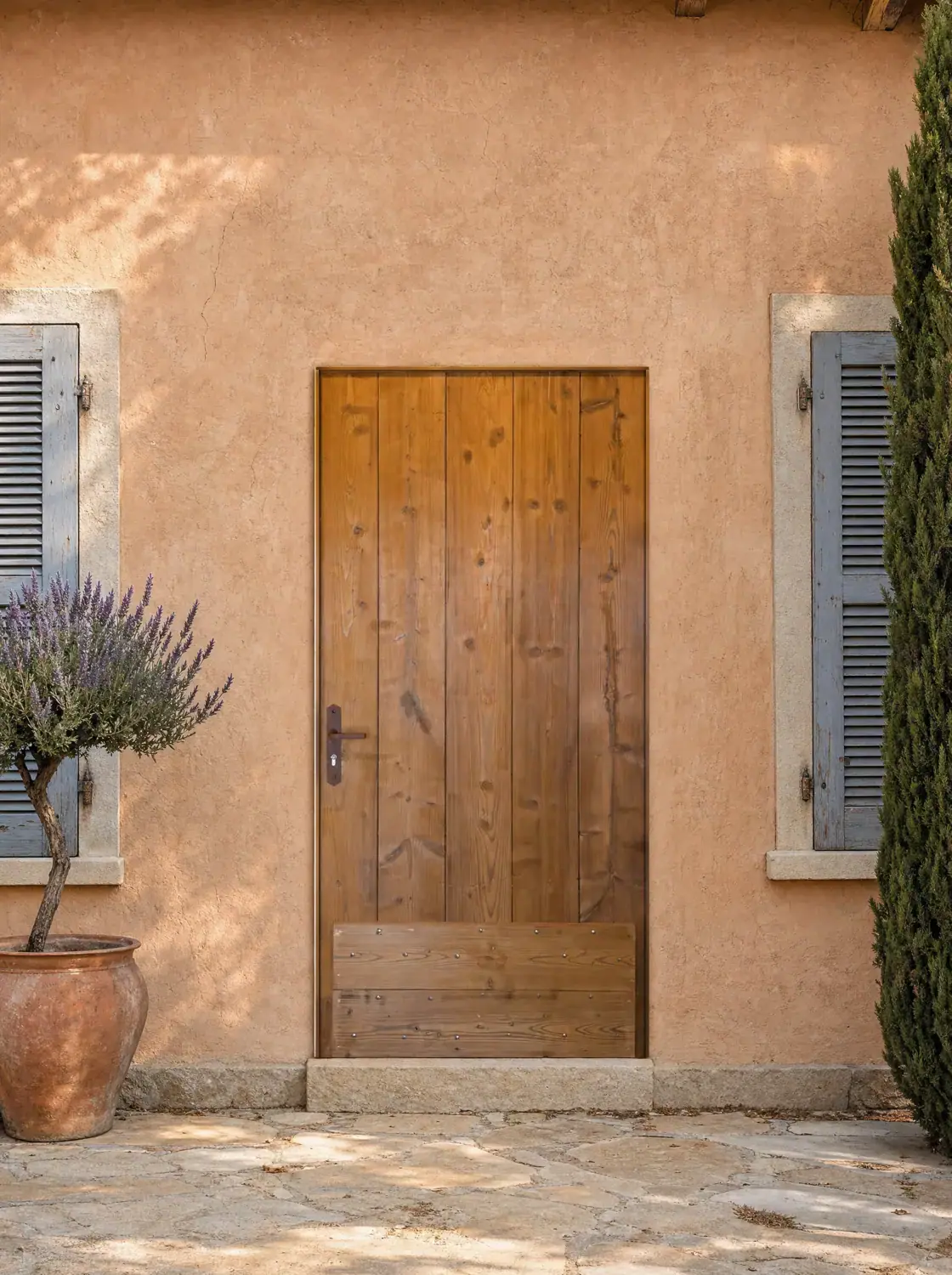
Oak door with horizontal planks

Door with horizontal-board lining

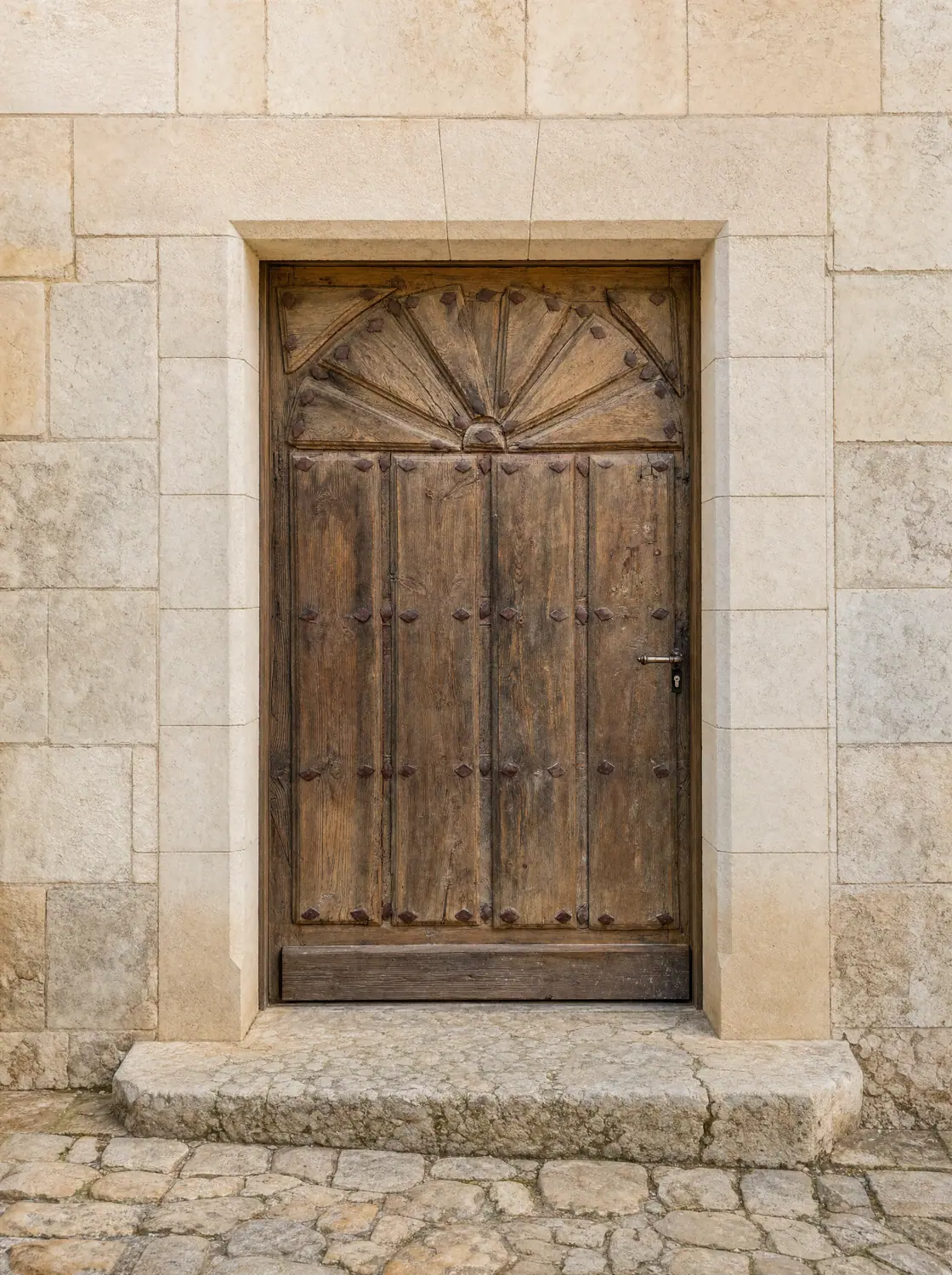
Restored 18th-century antique door with carved fan

Restored 18th-century door

Restored, carved wood, forged nails

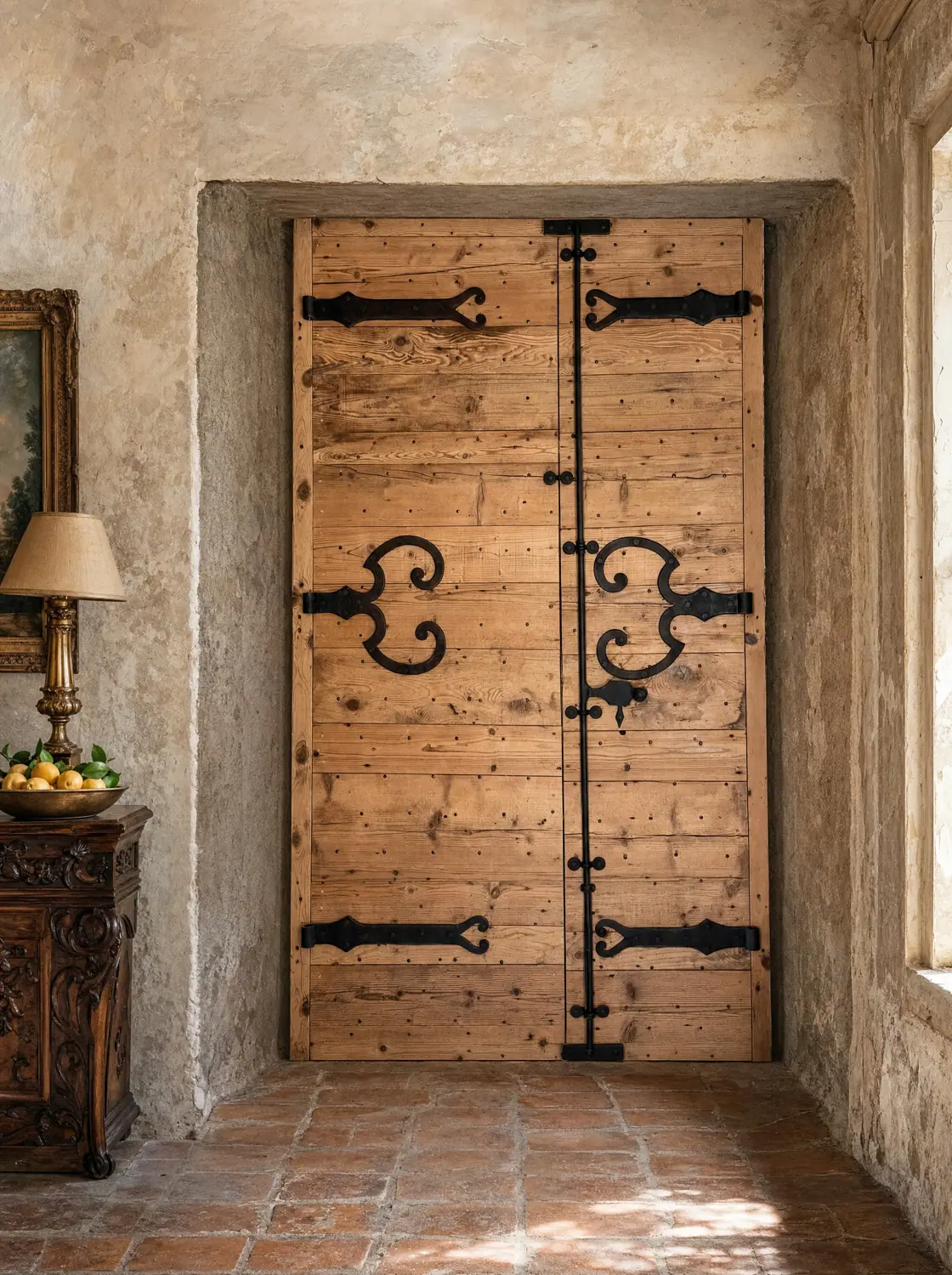
Door with restored antique ironwork on an old pine lining

Door with antique ironwork

Restored ironwork, old pine lining

The detail

The material, the gesture.

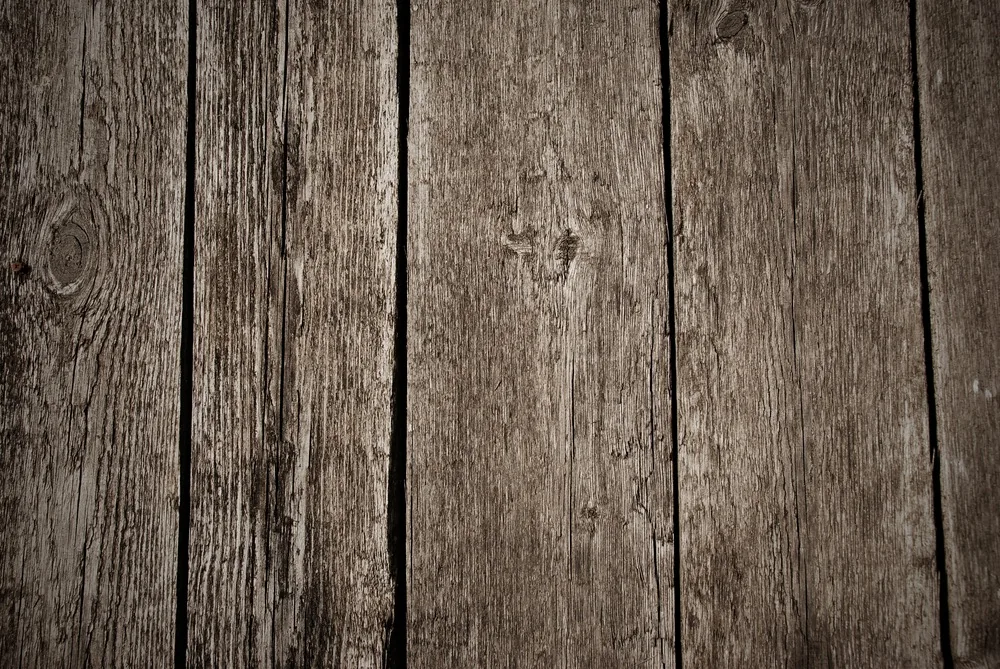
Patinated old wood planks

Planks and patina

The grain, the knots and the marks of time

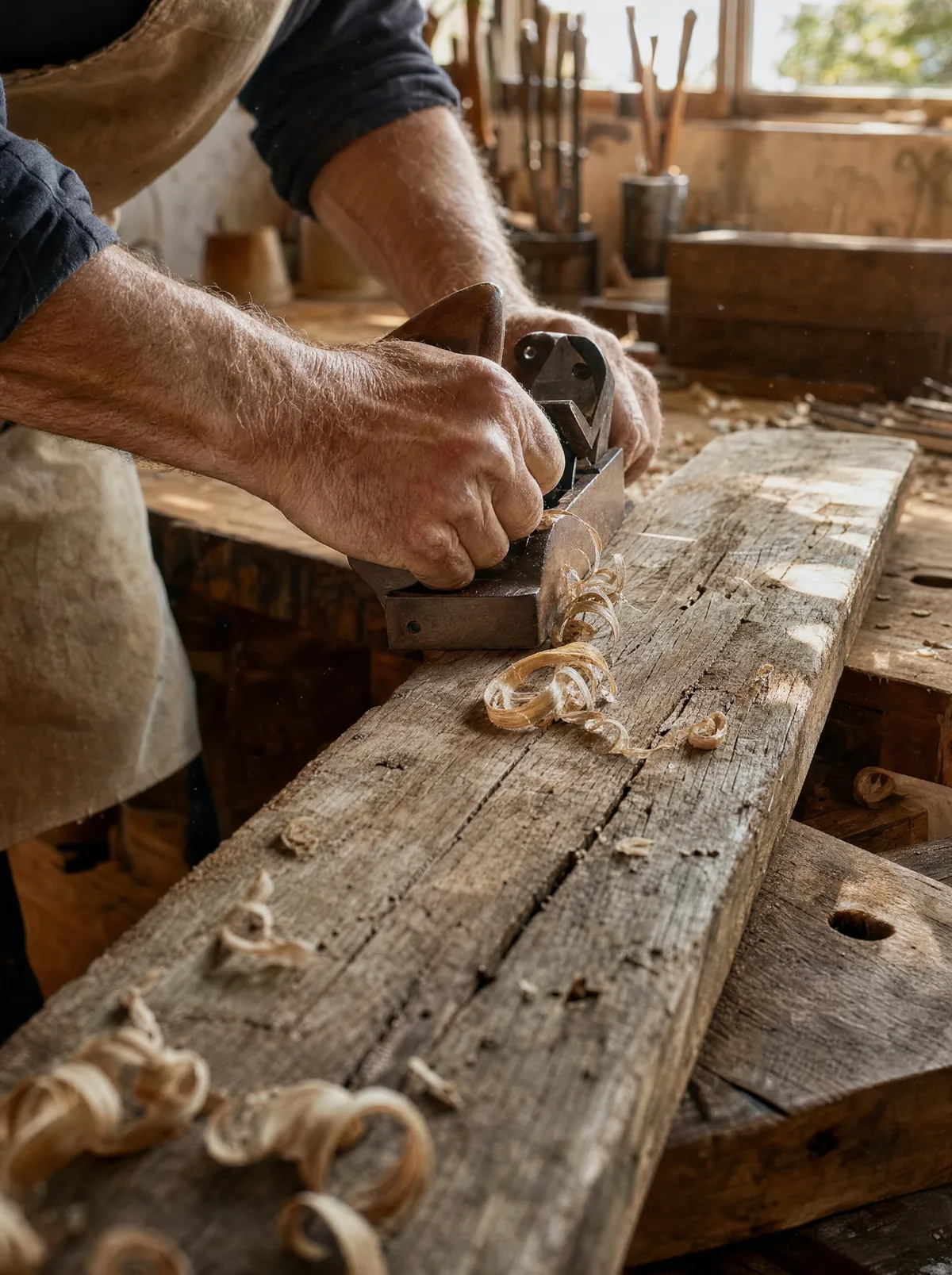
A joiner's hands planing a board

The gesture

Planing a board of old oak

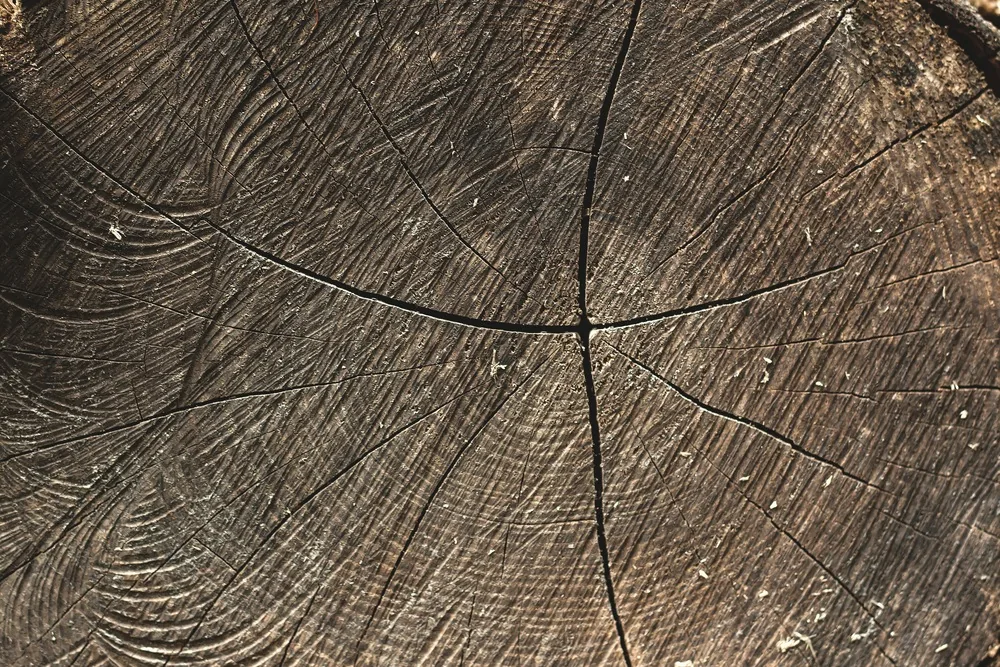
Cross-section of old wood, rings and cracks

Rings and cracks

Wood keeps the trace of the years

Choosing your door

Solid oak entrance door, glazed or arched.

  • Solid oak entrance door

    Wide, thick boards of solid reclaimed oak, assembled by hand: a dense wood that keeps its knots, cracks and patina. Oak is the species of the traditional entrance door, sturdy and durable.

  • Glazed entrance door

    Our Mas and Bergerie models, in reclaimed oak, are glazed: metal frame, for example with 4 panes, and burglar-resistant glass. Light comes into the hall without the door losing its character.

  • Arched or double-leaf entrance door

    Arched, for example in patinated old pine, or double-leaf, the door is marked out for the opening of the bastide or the mas: dimensions, shape and opening direction made to measure.

  • Restored old wooden door

    An old wooden door keeps its patina and its original ironwork: the workshop restores antique doors from the 16th to the 20th century, in walnut or oak, or reproduces them identically.

Exploded sketch

Lined board entrance door

The full joinery glossary
12345678910
  1. 1Door frame (dormant)The fixed frame, sealed or screwed into the masonry, against which the door closes. It carries the pintles or hinges and the lock's strike plate. On an entrance door, the frame is solid wood, often the same species as the door.
  2. 2Threshold (sill)The lower part of the opening, in stone or wood, on which the door closes. It slopes slightly outwards to shed water.
  3. 3PintleAn angled iron pin, sealed into the masonry or screwed into the frame, on which the strap hinge turns. A door is lifted off its pintles to remove it.
  4. 4LiningA second layer of boards fixed to the inner face of a board door, often crossing the first: vertical boards outside, horizontal boards inside, nailed together the traditional way. The lining makes the door stiffer, better insulated, and gives it two faces.
  5. 5BoardA long, narrow plank joined to its neighbours, usually by tongue and groove. A board door is made of vertical or horizontal boards, on ledges or on a lining.
  6. 6Forged nailA nail with a hand-hammered head. On a lined door it goes through both layers of boards; its point is traditionally bent over on the inside to clamp the two thicknesses together. Its rows draw the pattern of the door.
  7. 7WeatherboardA moulded piece fixed to the bottom of the outer face of an entrance door, which throws rainwater clear of the threshold and protects the bottom of the leaf.
  8. 8Strap hingeA long iron strap fixed on the leaf, ending in an eye that turns around the pintle. Visible on the face, it holds the door and decorates it; in wrought iron, its end is often shaped.
  9. 9EscutcheonA pierced metal plate that frames the keyhole and protects the wood around it.
  10. 10Door knockerAn iron ring or hammer fixed on the outer face of an entrance door, used for knocking. Today it is mostly decorative.

Lined board entrance door

The traditional reclaimed wood entrance door, seen from outside, with every part pulled apart: the frame fixed in the wall and its pintles, the lining of horizontal boards on the house side, the face of vertical boards on the street side, then the nails and forged ironwork, each taken out of its place. The dotted lines show where each part is fixed.

Tap or hover over a part of the drawing: its definition appears here.

The trade's vocabulary

The vocabulary of an entrance door.

The full glossary and door diagrams
Door frame (dormant)
The fixed frame, sealed or screwed into the masonry, against which the door closes. It carries the pintles or hinges and the lock's strike plate. On an entrance door, the frame is solid wood, often the same species as the door.
Lining
A second layer of boards fixed to the inner face of a board door, often crossing the first: vertical boards outside, horizontal boards inside, nailed together the traditional way. The lining makes the door stiffer, better insulated, and gives it two faces.
Strap hinge
A long iron strap fixed on the leaf, ending in an eye that turns around the pintle. Visible on the face, it holds the door and decorates it; in wrought iron, its end is often shaped.
Forged nail
A nail with a hand-hammered head. On a lined door it goes through both layers of boards; its point is traditionally bent over on the inside to clamp the two thicknesses together. Its rows draw the pattern of the door.
Weatherboard
A moulded piece fixed to the bottom of the outer face of an entrance door, which throws rainwater clear of the threshold and protects the bottom of the leaf.
Threshold (sill)
The lower part of the opening, in stone or wood, on which the door closes. It slopes slightly outwards to shed water.
Frequently asked questions

What people ask us most often.

Are your entrance doors made of solid oak?

Yes. Our oak entrance doors are assembled from boards of solid reclaimed oak, often wagon-floor oak, with forged nails and ironwork. We also make them in reclaimed pine and walnut.

Do you make made-to-measure entrance doors?

Yes. Every entrance door is made to your dimensions in our workshop in Eygalières: the species (reclaimed oak, pine, walnut), the shape (solid, arched, glazed, double-leaf), the opening direction, the ironwork and the finish are chosen with you.

Can you reproduce an antique entrance door?

Yes, all our pieces can be reproduced. From a photo or the original door, we remake the boards, the forged ironwork and the dimensions, or we restore the door when it can be restored.

Do you make glazed entrance doors?

Yes: our Mas and Bergerie models, in reclaimed oak, are glazed, with a metal frame, for example with 4 panes, and burglar-resistant glass. The dimensions and the frame are defined with you.

Do you make arched entrance doors?

Yes: arched doors, for example in patinated old pine, and double-leaf doors, marked out for the opening of the house.

Do you offer old wooden doors?

Yes: the workshop offers restored antique doors, from the 16th to the 20th century, in walnut or oak, with their original patina and ironwork. An old wooden door can also be reproduced identically, to your dimensions.

An entrance door for your project?

Each door can be adapted: dimensions, species, opening direction, hardware.
Let's talk about your project